
Addiction doesn’t just affect the person using; it hits everyone in the family. Spouses, kids, parents, and siblings all feel the impact. At Memphis Detox in Memphis, Tennessee, we understand that substance use disorders create complex emotional wounds and communication breakdowns within the home. Family therapy for addiction is a specialized treatment approach.
It is designed to heal these relationships and support an individual’s journey to sobriety. When we bring loved ones into treatment, we help the whole family. They learn to communicate better, set boundaries, and support recovery instead of enabling it.
Our clinical team at Memphis Detox walks families through this process. We guide them from chaos and hurt to understanding and healing.
Why is Addiction Considered a Family Disease?
The concept of addiction as a “family disease” reflects the reality that substance use alters the functioning of the entire household. When one person struggles with drugs or alcohol, family members often adapt their behaviors. This can lead to unhealthy patterns that persist for years.
Living with someone’s addiction means constant stress and never knowing what’s coming next. Family members may experience heightened anxiety, financial instability, and a loss of trust. To cope, family members fall into rigid roles. These roles, such as the caretaker or hero, can unintentionally prolong the addiction.

How Substance Abuse Affects Family Systems
Addiction throws the family off balance. People stop talking honestly, relationships get strained, and everyone starts walking on eggshells. These disruptions often manifest in specific, damaging ways:
- Communication breakdown: Family members may stop sharing honest feelings to avoid conflict, leading to secrecy and emotional distance.
- Role reversals: Children may take on adult responsibilities because the parent is incapacitated.
- Emotional instability: The household climate often depends on the substance user’s mood, creating an atmosphere of “walking on eggshells.”
- Loss of trust: Repeated broken promises and erratic behavior erode the foundation of safety and reliability within relationships.
Without realizing it, families often enable the addiction—calling in sick for their loved one, paying off debts, or making excuses to keep the peace. Family therapy helps everyone spot these patterns and learn the difference between helping and enabling.
What is Family Therapy?
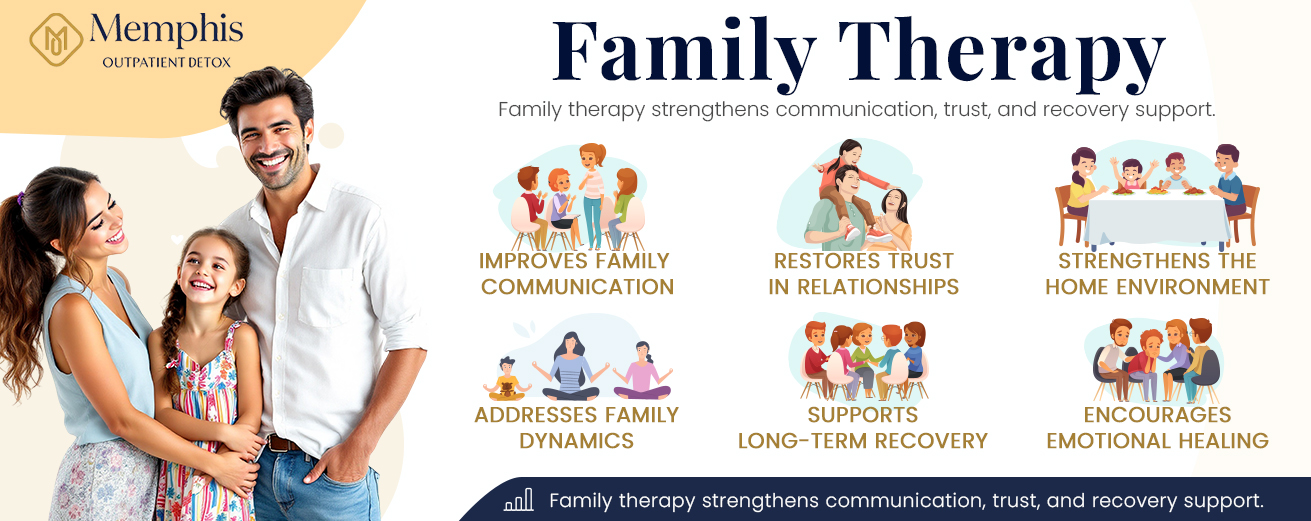
Family therapy treats the whole family, not just the person struggling with addiction. The goal is simple: help the family work better together, which makes it easier for the person in recovery to stay sober. We use different therapy approaches depending on the family’s situation and the client’s age.
- Multidimensional Family Therapy (MDFT): This integrative approach is often used for adolescents. It addresses four key areas: the adolescent, the parent, family interactions, and external systems.
- Behavioral Couples Therapy (BCT): This model focuses on married or cohabiting couples. It uses a “recovery contract” where partners support abstinence and improve their relationship.
- Brief Strategic Family Therapy (BSFT): This approach targets interaction patterns that maintain behavioral problems. It is effective for families with high conflict or resistance to change.
Unlike individual therapy, which focuses on personal introspection and coping mechanisms, family therapy centers on relational dynamics. A therapist creates a space for families to have hard conversations. They can start breaking patterns that are not working.
How Did Family Therapy Develop?
Family therapy became popular in the 1950s and ’60s. Clinicians realized treating people in a vacuum didn’t work. Patients would return to the same broken family dynamics. Early pioneers observed that patients would often relapse upon returning to unchanged family environments. This led to the birth of systems theory. This is the idea that families are emotionally connected, and one person’s struggle affects everyone.
In the 1970s and 1980s, researchers found that family involvement improved treatment. Retention rates increased, and relapse rates dropped. These days, family therapy is a core part of effective addiction treatment. At Memphis Detox, we use these approaches to ensure families are not just on the sidelines. We make sure they are actively involved in recovery.


Goals of Family Therapy
The goal is straightforward: create a home where staying sober is easier and relapse is less likely. Therapists help families set specific goals that actually work for everyone.
- Establishing healthy boundaries: Families learn to define what behaviors are acceptable and what are not, stopping enabling cycles.
- Improving communication: Therapy teaches specific skills for active listening and expressing needs without aggression.
- Educating the family: Understanding the biology and psychology of addiction helps reduce blame and stigma, fostering empathy.
- Restoring trust: Through consistent, positive interactions, families begin to repair the damage caused by years of substance use.
Core Principles of Family Therapy
- Systemic Perspective: The therapist views problems as circular rather than linear. Instead of asking “Who started it?”, the focus is on “How can we change that cycle?”
- Non-Blaming Approach: Therapy moves the conversation from what went wrong to what comes next. It helps everyone understand addiction is a disease, not a character flaw.
- Collaboration: Therapists work with families, respecting what matters to each family and building on their strengths.
- Strength-Based Focus: Therapy finds what already works in a family, like loyalty or resilience. It uses those strengths to tackle difficult issues.
Family Therapy for Addiction
Family therapy changes how families talk to and treat each other. A therapist runs sessions where everyone can say what they’re feeling, without it turning into a screaming match. The therapist watches how the family interacts, spots the unhealthy patterns, and helps them try new approaches.
Sessions usually include learning about addiction, practicing better communication, and working through real problems together. For example, a family might role-play how to handle a potential relapse or decline an invitation to a gathering where alcohol will be present.
Integration with Medical Detox Services
Family involvement often begins during the detox phase. During detox, therapists keep families in the loop. They explain what is happening with withdrawal and what comes next. Getting families involved early helps everyone feel steadier and ready for the next phase of treatment.
At Memphis Detox, we provide outpatient detox services, meaning clients can return home or to sober-living arrangements each day. We encourage family involvement in treatment and provide resources to help families understand recovery.


Benefits of Family Therapy for Addiction
Family therapy does more than just help someone stop using.
- Higher retention rates: Individuals are more likely to stay in treatment when their family is involved and supportive.
- Reduced substance use:
- Improved mental health: As things calm down, family members report feeling less depressed and anxious.
- Prevention for future generations: When families break these patterns, kids are less likely to develop addiction problems.
The skills families learn (like how to handle conflict and manage emotions) stick around for good.
Why is Support Important During Recovery?
Recovery takes time, and you need solid support to make it work. Family support is different from peer groups. It comes from years of shared history and deep connections. A supportive family catches you when you stumble and cheers you on when you hit milestones.
But there’s a big difference between support and enabling. Family therapy teaches families how to tell the difference. Support means encouraging healthy stuff like going to meetings or picking up hobbies. Enabling means protecting someone from the consequences of their addiction. Strong support from family helps people stay sober long-term, while constant fighting at home makes relapse more likely.


Family Therapy for Addiction FAQs
Family therapy works for just about any family dealing with addiction, no matter what your family looks like or how severe the problem is. It is not necessary to wait until the person with the addiction is fully willing to participate. Models like Community Reinforcement and Family Training (CRAFT) are specifically designed for families whose loved one is resistant to treatment. Candidates include:
- Spouses and partners: Couples therapy can help rebuild intimacy and trust shattered by addiction.
- Parents of adolescents or adults: Parents can learn to set boundaries that encourage independence and recovery.
- Adolescents and children: Young people benefit from having a safe space to process their confusion and anger.
- Extended family: Grandparents, aunts, uncles, or close friends who play a significant role can also participate.
In many cases, health insurance covers family therapy when it’s part of a treatment plan for substance use disorder. The Mental Health Parity and Addiction Equity Act requires most insurance plans to provide benefits for mental health and substance use treatment comparable to medical benefits.
Coverage varies depending on your specific plan. Some policies cover family therapy as a standalone service, while others only cover it when the person with the addiction is enrolled in an intensive outpatient or residential program.
Verifying benefits can be done by contacting the insurance provider directly. It is helpful to ask about “family psychotherapy” codes (such as CPT code 90847). Our admissions team at Memphis Detox can help you verify your insurance coverage and figure out any out-of-pocket costs for family therapy.
Therapy can still be highly effective even if key family members refuse to join. The people who do show up can learn to change how they react, which often shifts the whole family dynamic.
The duration varies based on the family’s needs, but it generally lasts from a few months to a year. Short-term models may involve 12-16 sessions, while more complex family issues may require ongoing support.
Yes, family therapy can be incredibly beneficial before the individual enters treatment. It supports family members and teaches them how to encourage their loved ones to get help.
A qualified family therapist is a licensed mental health professional. They may be a Licensed Marriage and Family Therapist (LMFT) with training in addiction.
Recent data suggest that telehealth family therapy is comparable in effectiveness to in-person sessions. Virtual options remove barriers like travel time and can make it easier for geographically dispersed family members to participate.

Improve your Quality of Life with Family Therapy
Family therapy offers a path to healing for the entire household, transforming the pain of addiction into an opportunity for growth and deeper connection. By addressing the root causes of conflict and learning healthier ways to relate, families can break the cycle of dysfunction and build a foundation for lasting sobriety.
At Memphis Detox, we believe that recovery is a team effort. Our integrated approach combines medical excellence with compassionate family support, ensuring that you and your loved ones have the tools needed to reclaim your lives. Whether you are seeking help for cognitive behavioral therapy or comprehensive detox services, we are here to guide you every step of the way.
If you are ready to start the healing process, contact Memphis Detox to start your recovery journey.